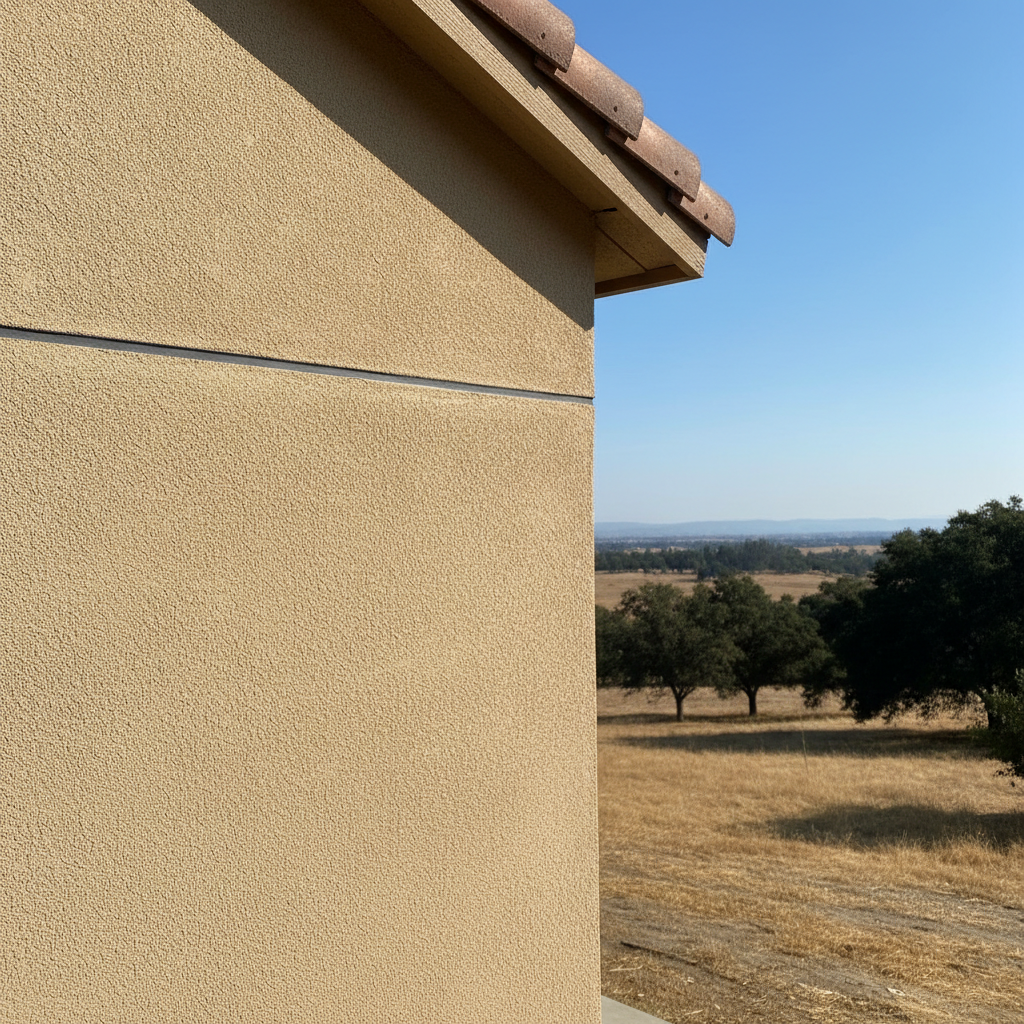
Alright, let's talk EIFS. I get a lot of questions about Exterior Insulation and Finish Systems, especially from folks here in Visalia. It's a different beast than traditional stucco, and it definitely has its own set of things you need to understand. So, I figured I'd just lay out the most common questions I hear and give you the straight scoop.
What exactly is EIFS, and how's it different from regular stucco?
Good question, because a lot of people mix 'em up. Regular stucco, the stuff you see on most older homes around Visalia, is basically cement, sand, and lime mixed with water. It's a hard, brittle material that gets applied in layers over a lath, usually with a paper or felt barrier behind it. It's a rain screen system, meaning it's designed to shed water. But if water does get behind it, the wall usually absorbs it and then it dries out.
EIFS is a whole different animal. It's a multi-layered system that starts with an insulation board – usually expanded polystyrene (EPS), which is kind of like the foam in a coffee cup – glued or mechanically fastened to your sheathing. Then, you get a base coat, often with a fiberglass mesh embedded in it for strength, and finally, a finish coat. The big difference? EIFS is a barrier system. It's designed to be watertight, keeping all moisture out. It's also got that insulation built right in, which is a huge plus for energy efficiency, especially when those Visalia summers really kick in, right?
Is EIFS durable? Will it hold up to our weather?
Absolutely, EIFS is very durable, especially the modern systems. The old stories you might hear about EIFS failures usually trace back to early installations from the 80s and 90s that didn't have proper drainage or flashing details. Building science has come a long way since then. Modern EIFS systems, when installed correctly by someone who knows what they're doing, are incredibly resilient.
Think about it: that foam core provides impact resistance, and the acrylic finish coats are flexible. That flexibility means they're less prone to cracking than traditional stucco, which is a big deal with our clay soils here in Visalia that can cause some foundation movement. It stands up great to our intense sun, and it's built to shed water effectively. You'll get a long life out of it if it's put on right and you do your basic maintenance.
What kind of maintenance does EIFS need?
It's not high-maintenance, but it's not no-maintenance either. The biggest thing is keeping it clean. Dust, dirt, and sometimes even mildew can accumulate, especially on north-facing walls that don't get as much sun. A gentle power wash with a mild detergent is usually all it takes. Just don't get too aggressive with the pressure washer; you don't want to damage the finish.
Beyond that, you need to regularly check your caulk joints, especially around windows, doors, and where the EIFS meets other materials. If you see any cracking or separation in the caulk, get it repaired. That's where water can sneak in. Also, keep an eye out for any physical damage, like dings or holes. If you spot something, get it patched up quickly. Visalia Stucco & Plastering can help with those repairs, big or small.
Is EIFS more expensive than traditional stucco?
Generally, yes, the upfront cost for EIFS tends to be higher than traditional stucco. You're paying for more materials – the insulation board, the specialized base coats, and the acrylic finish – and often for a more specialized installation process. It's a more complex system. However, don't just look at the initial price tag.
Where EIFS really pays off is in the long run. That built-in insulation means significantly lower heating and cooling bills. In a place like Visalia, where we run our AC for months on end, those energy savings can really add up over the years. Plus, its flexibility means fewer cracks and less repair work down the road compared to traditional stucco, which can often develop hairline cracks over time due to expansion and contraction.
Can I paint EIFS?
You sure can! EIFS finishes come in a huge range of colors, but if you decide you want a change down the road, painting is absolutely an option. You'll want to use a high-quality, breathable acrylic or elastomeric paint. Don't use oil-based paints or anything that will trap moisture. The key is to let the system breathe. Just like with any painting project, proper cleaning and preparation of the surface are crucial for good adhesion and a lasting finish. It's not much different than painting a traditional stucco wall, honestly.
What are the biggest benefits of choosing EIFS for my home?
- Energy Efficiency: This is a huge one. The continuous insulation layer significantly cuts down on heat transfer, keeping your home cooler in the summer and warmer in the winter. Your energy bills will definitely thank you.
- Design Flexibility: EIFS is incredibly versatile. Because it's applied over insulation board, you can create all sorts of architectural details – arches, cornices, columns – that would be much harder, or even impossible, with traditional stucco. You can get a smooth finish, a sand finish, a textured finish, whatever look you're going for.
- Durability & Crack Resistance: As I mentioned, the acrylic finishes are flexible, which helps prevent the cracking you sometimes see with cement-based stucco. It's tough and stands up well to impacts.
- Lightweight: It's much lighter than traditional stucco, which can be an advantage for some structures.
Look, EIFS isn't for every home or every homeowner, but for the right project, it's a fantastic system. It offers great performance, energy savings, and a beautiful, durable finish. If you're thinking about it for your Visalia home, give us a call at Visalia Stucco & Plastering. We can walk you through the specifics for your property.